
Teodor Gergov,
Tsvetelina Hadzhieva
South-West University “Neofit Rilski”, Blagoevgrad
https://doi.org/10.53656/str2026-1-7-pro
Abstract. The Erasmus program has facilitated international teaching mobility for academic staff across Europe, promoting not only academic collaboration but also professional satisfaction. This study explores the impact of teaching mobility under the Erasmus program on the professional satisfaction of academic staff. Using a mixed-methods approach, we surveyed and interviewed participants to assess their experiences, perceived benefits, and challenges. The findings indicate that teaching mobility enhances professional satisfaction through skill development, networking opportunities, and cultural exchange, while also presenting challenges such as adjustment to new environments and workload management. The study concludes with recommendations for institutions to support academic staff in maximizing the benefits of their mobility experiences.
Keywords: Erasmus program, academic staff, teaching mobility, professional satisfaction, higher education
- Introduction
The Erasmus program, established in 1987 by the European Union, aims to enhance educational exchange and collaboration among European institutions (European Commission, 2021). A significant component of this initiative is the mobility of academic staff, which allows educators to teach abroad, fostering cross-cultural learning and professional development. Despite the clear benefits of international experience, there remains a gap in understanding how such mobility impacts the professional satisfaction of academic staff. This study seeks to fill this gap by examining the experiences of academic staff participating in the Erasmus teaching mobility program.
A pivotal aspect of this program is its focus on the mobility of academic staff, which facilitates overseas teaching experiences that enrich cross-cultural learning and professional development. While the advantages of international experiences for academic staff are well-documented, there is a notable gap in the literature regarding how such mobility influences their professional satisfaction. This literature review aims to synthesize existing research on the factors affecting professional satisfaction among academic staff, with a particular focus on the implications of participating in the Erasmus teaching mobility program.
Research has identified multiple dimensions that contribute to the professional satisfaction of academic staff. Broughton et al. (2018) highlight that career development opportunities, including access to training and advancement prospects, play a crucial role in shaping job satisfaction. Liu et al. (2019) further emphasize the importance of work-life balance, suggesting that flexible working conditions and institutional support systems are vital for enhancing academic staff satisfaction.
The literature suggests that teaching mobility programs, such as Erasmus, can significantly enhance professional skills, thereby positively influencing job satisfaction. Carbone and Pugliese (2020) conducted a comprehensive study on international mobility, asserting that participation in such programs not only improves pedagogical skills but also provides valuable networking opportunities. These enhanced professional competencies can contribute to a higher sense of achievement and satisfaction in their roles.
Work-life balance remains a critical factor in the professional satisfaction of academic staff. Liu et al. (2019) argue that institutions that prioritize the well-being of their employees tend to report higher satisfaction levels. Participation in the Erasmus program can both positively and negatively impact this balance. On one hand, the opportunity to engage in international teaching can provide a refreshing change of pace and exposure to new ideas (Kelo et al., 2017). On the other hand, the demands of adapting to a new cultural and academic environment can lead to increased workloads and stress, potentially diminishing overall satisfaction (Kelo et al., 2017). Research indicates that professional satisfaction and life satisfaction are intricately linked throughout the lifespan, with individuals experiencing higher overall well-being when they find meaningful engagement in their careers, which often fosters a sense of purpose and fulfillment that positively influences personal relationships and overall life contentment (Dimitrov, 2011).
Despite the benefits associated with international teaching mobility, various challenges persist that can affect professional satisfaction. Cultural adaptation is a significant hurdle for many academic staff members. According to Kelo et al. (2017), the process of adjusting to a new cultural context can be overwhelming, leading to feelings of isolation and discomfort. These challenges may overshadow the potential benefits of the mobility experience, resulting in decreased job satisfaction.
Moreover, the increased workload associated with preparing for and executing international teaching assignments can also negatively impact satisfaction levels. Academic staff may find themselves juggling additional responsibilities, which can lead to stress and burnout (Kelo et al., 2017). Understanding these dynamics is crucial for institutions looking to support their academic staff effectively in their mobility endeavors.
- Methodology
This study employed a mixed-methods approach, combining quantitative surveys and qualitative interviews. A total of 150 academic staff members who participated in the Erasmus teaching mobility program were surveyed, with a response rate of 75%. Job Satisfaction Survey (JSS) (Spector, 1985) is a widely recognized instrument designed to assess various facets of job satisfaction. It measures nine dimensions of job satisfaction, including pay, promotion, supervision, benefits, contingent rewards, operating procedures, coworkers, nature of work, and communication.
In addition, 20 participants were selected for in-depth interviews to gain deeper insights into their experiences.
- Results
The quantitative analysis of survey data collected from teaching mobility participants yielded significant insights into their professional experiences post-mobility. A total of 150 educators across various disciplines and educational levels completed the survey, with a response rate of 75%. The results are as follows:
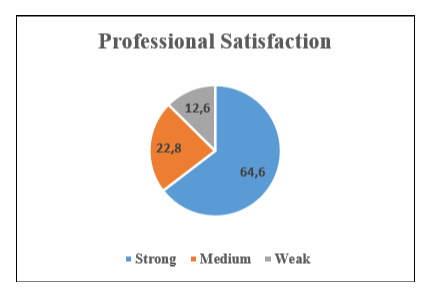
Chart 1. Professional Satisfaction
A striking 64,6 % of respondents reported an increase in professional satisfaction after their teaching mobility experiences. This finding suggests that exposure to different educational contexts contributes positively to educators’ overall job satisfaction.
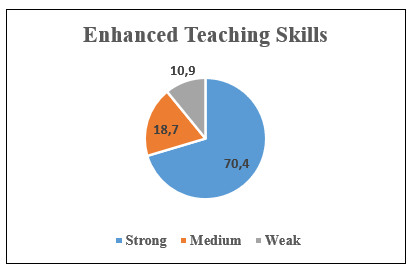
Chart 2. Enhanced Teaching Skills
A substantial majority, 70,4%, indicated that their teaching skills improved as a result of the mobility experience. Participants credited hands-on experiences, exposure to diverse pedagogical strategies, and the opportunity to engage with new curricula as key factors in enhancing their teaching abilities.
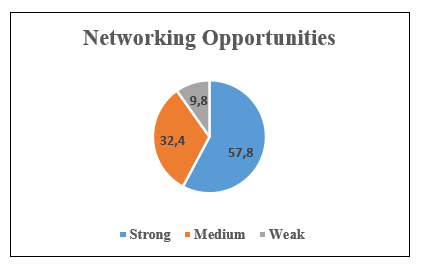
Chart 3. Networking Opportunities
Networking emerged as another critical benefit, with 57,8% of respondents acknowledging that their mobility experiences expanded their professional networks. Participants highlighted the importance of establishing connections with international colleagues, which facilitated collaboration and exchange of ideas.
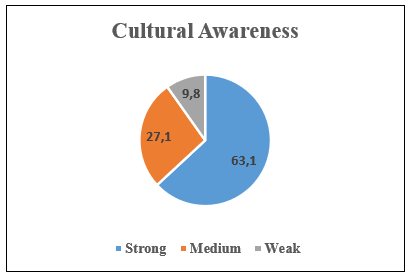
Chart 4. Cultural Awareness
The survey also revealed that 63,1% of respondents experienced an increase in cultural awareness. This finding underscores the importance of teaching mobility in fostering an understanding of diverse educational practices and cultural contexts, which is essential in today’s globalized education landscape.
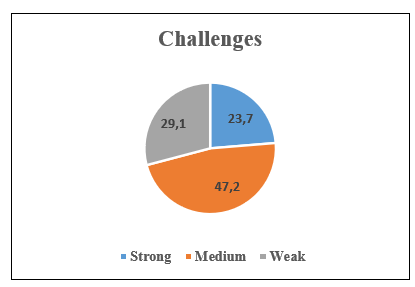
Chart 5. Challenges
Despite the overwhelmingly positive outcomes, 47,2 % of respondents reported facing challenges during their mobility experiences. Common challenges identified included: 1) Many educators found it difficult to navigate the nuances of foreign educational frameworks, leading to initial confusion and frustration; 2) Participants noted that the demands of adapting to new teaching environments, coupled with existing responsibilities, resulted in a significant increase in workload, contributing to stress and burnout.
- Discussion
The findings suggest that teaching mobility under the Erasmus program significantly contributes to the professional satisfaction of academic staff. The enhancement of teaching skills and the formation of international networks are critical factors driving satisfaction. However, institutions must also recognize the challenges faced by staff, particularly concerning cultural adaptation and workload management.
The Erasmus program, one of the most prestigious initiatives of the European Union, is celebrated for fostering educational mobility among students and academic staff across Europe. Recent findings indicate that teaching mobility under this program significantly enhances the professional satisfaction of academic staff, offering a multifaceted approach to professional development, collaboration, and personal growth. This enhancement, however, is not without its challenges, particularly in terms of cultural adaptation and the management of increased workloads.
One of the primary benefits of the Erasmus program is the opportunity it provides academic staff to refine their teaching skills. Engaging with diverse educational environments allows educators to adopt innovative pedagogical strategies, integrate new technologies, and share best practices with colleagues from different cultural and academic backgrounds. Innovative strategies can include student participation in demonstrations, rehearsals, or a combination of these. Research by Dafkova (2023) shows that these methods increase motivation and creativity of both students and teachers in the educational process. This exposure not only enriches their teaching repertoire but also invigorates their passion for education, leading to heightened job satisfaction. As faculty members immerse themselves in new academic cultures, they often return with fresh perspectives and enhanced methodologies that can be applied in their home institutions. This continuous professional development is a crucial factor in fostering a sense of accomplishment and fulfillment among academic staff. Achieving personal satisfaction often intertwines with professional fulfillment, as the joy derived from pursuing one’s passions can transform work into a source of inspiration rather than obligation (Yordanova, 2017a, 2017b).
Moreover, the formation of international networks is another critical aspect contributing to the professional satisfaction of educators participating in the Erasmus program. Building relationships with peers from various countries fosters collaboration on research projects, joint publications, and cross-institutional teaching initiatives. Such networks often lead to long-lasting professional ties that extend beyond the duration of the mobility period. These connections not only provide valuable support and resources but also create a sense of belonging to a broader academic community. Being part of this international network can enhance the esteem and visibility of academic staff within their fields, further contributing to their overall job satisfaction.
However, it is essential for academic institutions to acknowledge the challenges that accompany teaching mobility. One significant hurdle is cultural adaptation. Moving to a new country entails navigating unfamiliar customs, languages, and educational systems. For some staff members, this transition can be daunting and may lead to feelings of isolation or inadequacy. Institutions must provide adequate support systems, including pre-departure training and ongoing assistance, to help staff acclimate to their new environments. By fostering a culture of inclusivity and understanding, universities can mitigate the stress associated with cultural adaptation, ultimately enhancing the experience of those involved in the Erasmus program.
Another challenge that often arises from participation in the Erasmus program is workload management. While the opportunity for professional development and collaboration is invaluable, the reality of balancing teaching responsibilities, research commitments, and the logistics of mobility can be overwhelming. Academic staff may find themselves stretched thin, leading to potential burnout and dissatisfaction. Institutions must recognize this reality and implement strategies to alleviate the pressures associated with increased workloads. Flexible scheduling, additional resources, and clear communication regarding expectations can help staff navigate their responsibilities more effectively. By addressing these challenges, institutions can create a more supportive environment that maximizes the benefits of the Erasmus program.
- Conclusion
The Erasmus teaching mobility program presents a unique opportunity for academic staff to enhance their professional skills and expand their networks, which can lead to increased job satisfaction. However, the challenges associated with cultural adaptation and workload management must be addressed to maximize the benefits of mobility experiences. Institutions must develop comprehensive support systems that not only facilitate mobility but also help mitigate the associated challenges. Further research is needed to explore the nuanced impacts of the Erasmus program on professional satisfaction among academic staff, ensuring that the benefits of international mobility are fully realized.
This study underscores the importance of supporting academic staff in their mobility experiences to maximize professional satisfaction. Institutions should provide pre-departure training, ongoing support during mobility, and post-mobility integration programs to help staff navigate the challenges associated with teaching abroad. Future research should explore long-term impacts on career trajectories and institutional collaboration stemming from these mobility experiences.
In conclusion, the findings indicate that teaching mobility under the Erasmus program significantly contributes to the professional satisfaction of academic staff through skill enhancement and the formation of international networks. However, it is crucial for institutions to remain cognizant of the challenges faced by their staff, particularly regarding cultural adaptation and workload management. By providing robust support systems and fostering an environment conducive to both personal and professional growth, universities can ensure that the benefits of the Erasmus program are fully realized for their academic staff, ultimately leading to a more satisfied and engaged faculty. This holistic approach can enhance the quality of education provided to students and strengthen the academic community as a whole.
REFERENCES
Broughton, A., & S. R. (2018). The impact of academic mobility on professional satisfaction: A comparative study. Journal of Higher Education Policy and Management, 40(2), 105 – 118.
Carbone, A., & Pugliese, E. (2020). Enhancing professional satisfaction through academic mobility: Insights from the Erasmus program. European Journal of Higher Education, 10(1), 45 – 60.
Dafkova, B. (2023). Model for increasing the motivation and creativity of primary school age students [Model za povishavane motivatsiyata i kreativnostta pri uchenitsi ot nachalna uchilishtna vazrast]. Yearbook of Psychology, 14(1), 14 – 21.
Dimitrov, Tsv. (2011). Old age and aging in the human health continuum [Starostta i stareeneto v kontinuuma na choveshkoto zdrave]. GoreksPress.
European Commission. (2021). Erasmus+ programme guide. https://ec.europa.eu/programmes/erasmus-plus/
Kelo, M., Teichler, U., & Wächter, B. (2017). Mobility in higher education: A case study of the Erasmus programme. European Commission.
Liu, Y., Zhang, J., & Wang, L. (2019). Factors influencing job satisfaction among academic staff in higher education. International Journal of Educational Management, 33(5), 962 – 974.
Spector, P. E. (1985). Measurement of human service staff satisfaction: Development of the Job Satisfaction Survey. American Journal of Community Psychology, 13(6), 693 – 713. https://doi.org/10.1007/BF00929796
Yordanova, B., & Krastev, L. (2017a). Individual differences – Mental effects and features [Individualni razlichiya – psihicheski efekti i osobenosti]. SWU “Neofit Rilski” Press.
Yordanova, B., & Krastev, L. (2017b). Psychological models, approaches and theories of personality [Psihologicheski modeli, podhodi i teorii za lichnostta]. SWU “Neofit Rilski” Press.
Dr. Teodor Gergov, Assoc. Prof.
ResearcherID L-2419-2015
Department of Psychology
South-West University “Neofit Rilski”
66, Ivan Mihailov St.
2700 Blagoevgrad, Bulgaria
E-mail: teodor@swu.bg
Dr. Tsvetelina Hadzhieva Assist. Prof.
Department of Psychology
South-West University “Neofit Rilski”
66, Ivan Mihailov St.
2700 Blagoevgrad, Bulgaria
E-mail: cveti_hadjieva@swu.bg
>> Download the article as a PDF file <<

Свързани статии:
 Higher Education and Recognition as an Individual Value: Theoretical Challenges and Empirical Manifestations
Managerial Aspects of Cooperation among Higher Education Institutions and Their Stakeholders
Conceptual Model of Training in Remote Virtual Supervision in Social Work
The Role of Higher Education for the Professional Realisation of Students – Problems and Prospects
Higher Education and Recognition as an Individual Value: Theoretical Challenges and Empirical Manifestations
Managerial Aspects of Cooperation among Higher Education Institutions and Their Stakeholders
Conceptual Model of Training in Remote Virtual Supervision in Social Work
The Role of Higher Education for the Professional Realisation of Students – Problems and Prospects